Quendro Pest Control Group logoQuendro Pest Control Group
Rodent Exclusion and Abatement · Indianapolis, IN

Pest Control Service

Securing an authoritative pest control service Indianapolis homeowners trust requires an engineering-grade approach that targets biological nesting zones rather than surface-level cosmetic symptoms. Our structural defense protocols eliminate active infestations of rodents, subterranean termites, bedbugs, and seasonal insect vectors while establishing permanent physical barriers to stop recolonization across Marion County properties.

Talk to a real Indianapolis pro

No forms — call now for a fast, no-pressure quote.

📞 Call (463) 271-7277

Rodent Exclusion and AbatementSubterranean Termite Liquid Defense and MonitoringThermal and Micro-Residual Bedbug Remediation
Pest Control Service in Indianapolis, IN
Rodent Exclusion and Abatementin Indianapolis, IN

How much does pest control service cost in Indianapolis?

Pest control service in Indianapolis is a specialized structural and biological management process designed to identify, eradicate, and exclude invasive insect and vertebrate populations from residential and commercial properties.

Why Indianapolis homeowners choose Quendro Pest Control Group

  • Comprehensive property inspections pinpoint primary subterranean nesting colonies, thermal entry corridors, elevated crawlspace moisture reservoirs, and unsealed foundation breaches.
  • Permanent biological exclusion physically seals exterior envelope gaps exceeding one-quarter inch using twenty-gauge stainless steel mesh, copper cloth, and elastomeric structural sealants.
  • Integrated Pest Management (IPM) protocols deploy targeted insect growth regulators, micro-encapsulated contact solutions, and closed-loop baiting matrices to protect indoor air quality, pets, and children.
  • Seasonal perimeter barriers neutralize subterranean termite swarms in April and May, eliminate stinging insect colonies throughout summer, and stop indoor rodent migrations following the autumn freeze.
Rodent Exclusion and Abatement
Subterranean Termite Liquid Defense and Monitoring
Thermal and Micro-Residual Bedbug Remediation
Our Expertise

Crafted with Precision

Every service reflects the same meticulous attention to detail — whether it's a single job or a larger pest control service project across Indianapolis.
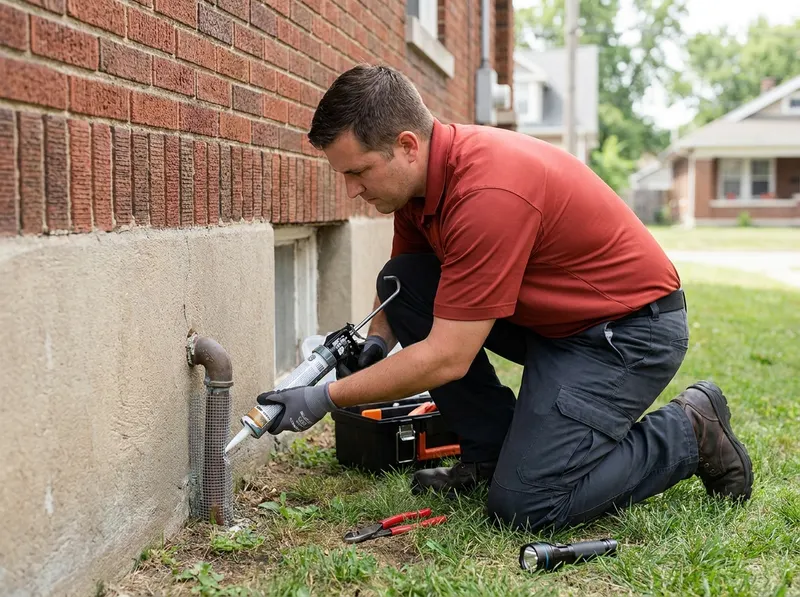
Rodent Exclusion and Abatement in Indianapolis, IN

Rodent Exclusion and Abatement

Complete structural extraction of house mice (Mus musculus) and Norway rats (Rattus norvegicus) combined with permanent exterior envelope exclusion. Technicians conduct a top-to-bottom assessment of the property envelope, identifying micro-openings around foundation sill plates, air-conditioning line sets, crawlspace louvers, and roof eaves. Every breach larger than one-quarter inch is physically sealed utilizing heavy twenty-gauge stainless steel mesh, copper gauze packing, and industrial elastomeric polyurethane sealants resistant to gnawing. Inside living areas, attics, and crawlspaces, mechanical snap traps are strategically calibrated along structural runways without using loose anticoagulant rodenticides that could endanger pets or create odor problems inside drywall cavities. Post-trapping sanitation protocols neutralize pheromone trails to ensure migrating outdoor rodents do not target previous entry paths.

View details →

Subterranean Termite Liquid Defense and Monitoring in Indianapolis, IN

Subterranean Termite Liquid Defense and Monitoring

Targeted subterranean termite (Reticulitermes flavipes) eradication utilizing non-repellent liquid termiticide barriers and high-density exterior monitoring systems. In the dense clay soils of Marion County, subterranean workers navigate through sub-grade foundation cracks to reach wooden sills, joists, and subflooring. Our certified technicians trench exterior foundation perimeters and treat concrete slabs through micro-drilling techniques, applying continuous non-repellent transfer chemistry. Foraging termites unknowingly pass through the treated zone, transferring active ingredients throughout the subterranean colony to achieve complete queen and colony elimination. Systems include multi-point annual inspection checks, comprehensive moisture readings across structural timbers, and digital mapping of high-risk subterranean approach corridors.

View details →
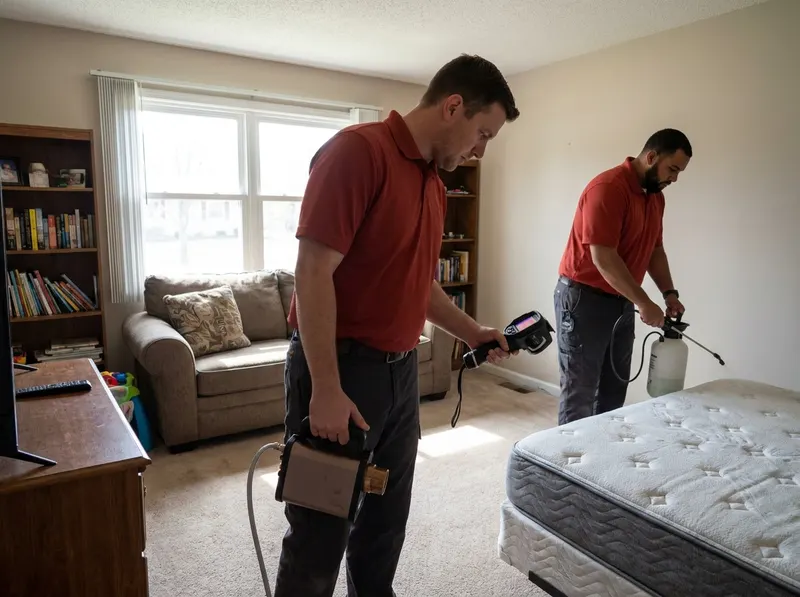
Thermal and Micro-Residual Bedbug Remediation in Indianapolis, IN

Thermal and Micro-Residual Bedbug Remediation

Clinical bedbug (Cimex lectularius) elimination utilizing concentrated thermal remediation, HEPA vacuum extraction, and targeted micro-crystallized desiccant applications. Bedbug infestations disrupt sleep hygiene and multiply rapidly within mattress bindings, headboard crevices, baseboard perimeters, and electrical junction boxes. Our treatment protocol starts with high-powered HEPA vacuuming to physically capture live adults and shed exuviae. Targeted thermal heat units then elevate harborages to lethal thermal death points (122°F to 135°F), penetrating deep into upholstery, mattress cores, and wall voids to eliminate heat-sensitive bedbug eggs on contact. We reinforce thermal zones with pharmaceutical-grade amorphous silica desiccant dust injected directly into electrical wall cavities, providing residual physical barrier protection that prevents re-infestation without releasing airborne chemical odors into sleeping quarters.

View details →
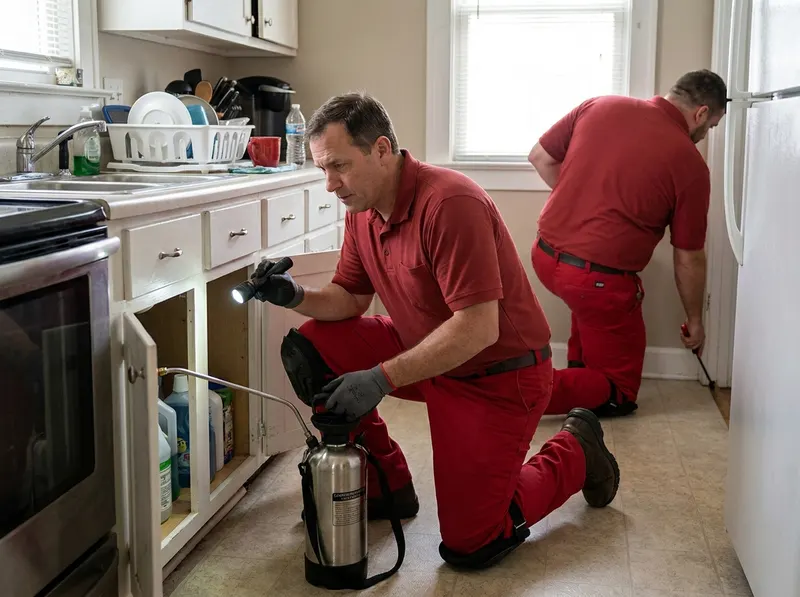
German and American Cockroach Eradication in Indianapolis, IN

German and American Cockroach Eradication

Systematic cockroach management addressing German cockroaches (Blattella germanica) in warm kitchen galleys and American cockroaches (Periplaneta americana) in moist below-grade utility chases. Cockroaches introduce allergens, trigger respiratory distress, and contaminate food preparation surfaces. We deploy non-repellent matrix baits containing abamectin or indoxacarb directly into micro-crevices behind sinks, dishwasher cabinetry, motor housings, and pantry baseboards. This is paired with specialized insect growth regulators (such as hydroprene and pyriproxyfen) that disrupt the insect molting process and sterilize breeding females. Direct void dusting in plumbing chases eliminates dark nesting hubs, achieving structural colony collapse without broad-spectrum indoor broadcast spraying.

View details →
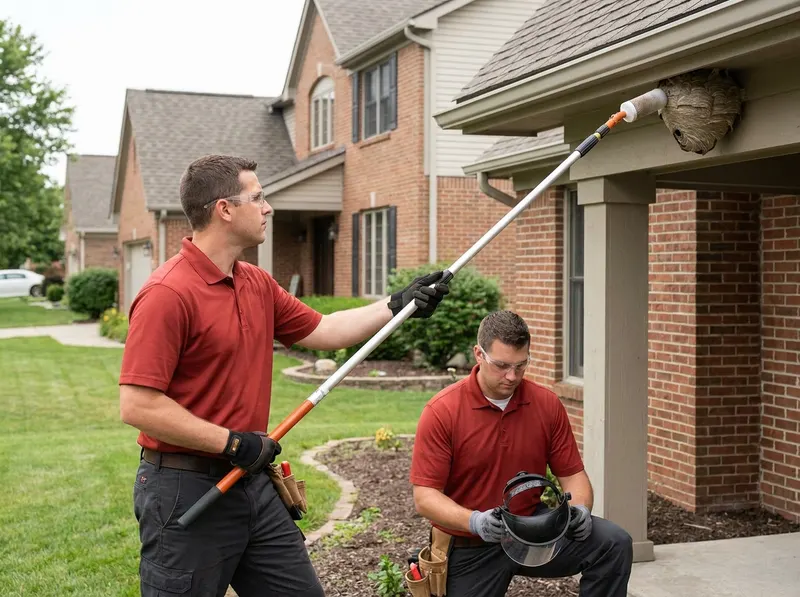
Stinging Insect and Aerial Hornet Removal in Indianapolis, IN

Stinging Insect and Aerial Hornet Removal

Safe knockdown, mechanical extraction, and harborage elimination of bald-faced hornets, paper wasps, and subterranean yellowjackets from roof soffits, chimney crowns, and landscape perimeters. Stinging insects create severe medical risks for allergic individuals and become aggressively defensive in late summer as natural food sources decline. Technicians utilize specialized high-reach aerosol injection gear and protective suits to eliminate aerial paper nests and underground yellowjacket cavities quickly and humanely. Once colony activity ceases, technicians physically detach the nest structure, treat the attachment substrate with residual repellent to prevent seasonal rebuilds, and seal roofline flashing voids to stop recurring nesting.

View details →
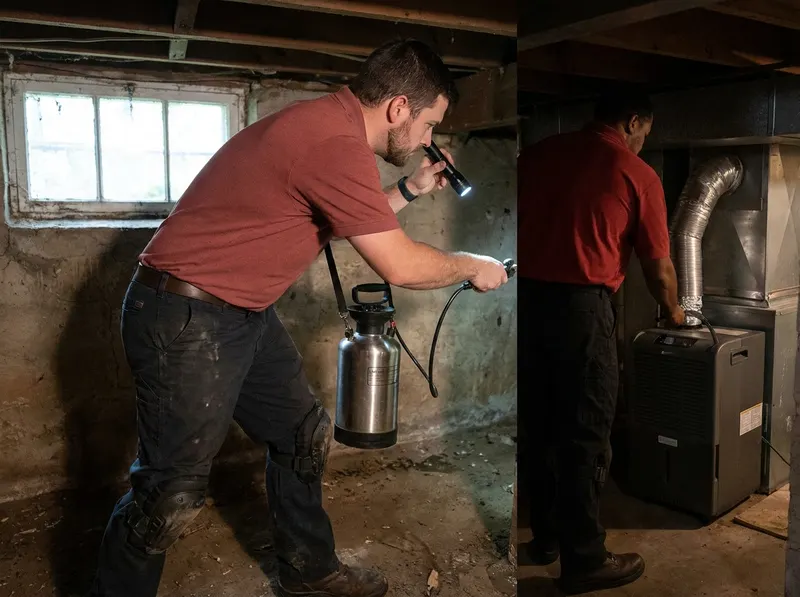
Crawlspace and Basement Moisture Pest Abatement in Indianapolis, IN

Crawlspace and Basement Moisture Pest Abatement

Comprehensive pest management targeting subterranean humidity pests, including camel crickets, silverfish, sowbugs, millipedes, and basement spiders that thrive in unconditioned below-grade spaces. High relative humidity in unfinished basements and dirt crawlspaces softens structural timbers and fuels fungal growth, creating a productive biome for moisture-dependent pests. Our approach integrates targeted void dusting, perimeter perimeter barrier applications, and focused recommendations for heavy vapor barriers. By neutralizing the damp micro-climate and applying micro-encapsulated contact barriers along perimeter sill plates, we prevent moisture-seeking pests from ascending into main-level living spaces.

View details →
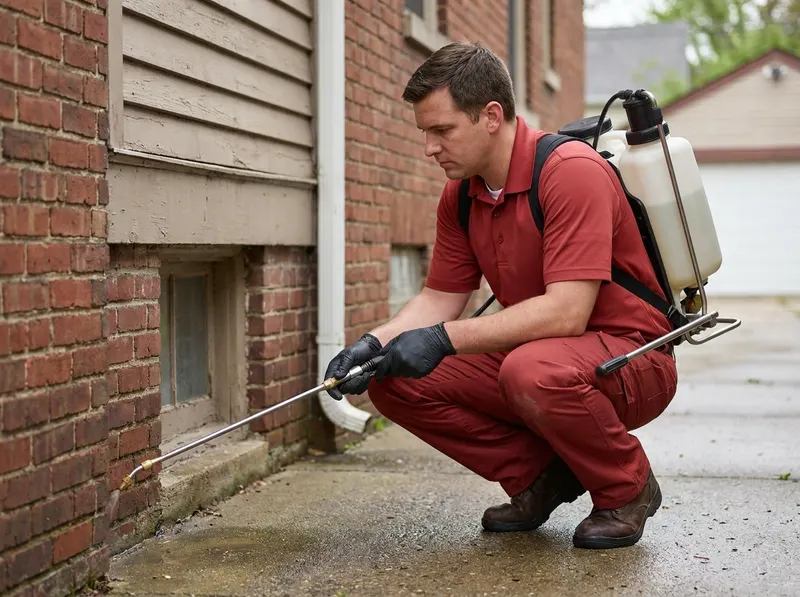
Seasonal Exterior Perimeter Barrier Defense in Indianapolis, IN

Seasonal Exterior Perimeter Barrier Defense

Proactive exterior multi-zone perimeter defense designed to intercept and repel nuisance invaders before they penetrate the home's building envelope. This protocol specifically targets seasonal invaders including odorous house ants, carpenter ants, brown marmorated stink bugs, western conifer seed bugs, and boxelder bugs. Treatments involve applying a low-odor, micro-encapsulated suspension three feet up the exterior foundation and three feet out across adjacent mulch and turf lines. Door thresholds, exterior window frames, weep holes, and utility entry points receive targeted contact treatments to create a continuous protective boundary that repels insects across fluctuating weather patterns.

View details →
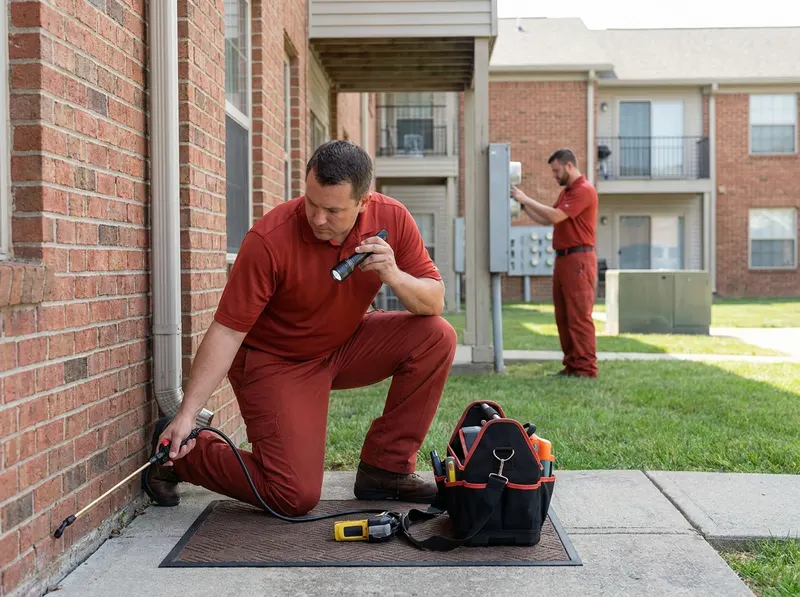
Commercial and Multi-Family Health-Code Pest Management in Indianapolis, IN

Commercial and Multi-Family Health-Code Pest Management

Rigorous, auditable Integrated Pest Management (IPM) designed for commercial kitchens, multi-family housing complexes, retail warehouses, and property management portfolios. Regulatory health standards demand documented proof of pest prevention without off-target contamination risks. We establish tamper-resistant exterior bait networks, electronic barcode-tracked interior monitoring stations, and comprehensive digital activity logs that meet all local health department compliance standards. Services are executed discreetly during off-peak commercial hours, focusing on sanitation consultation, structural entry exclusion, and targeted non-disruptive treatments.

View details →

Pest control service in Indianapolis is a specialized structural and biological management process designed to identify, eradicate, and exclude invasive insect and vertebrate populations from residential and commercial properties.

  • Comprehensive property inspections pinpoint primary subterranean nesting colonies, thermal entry corridors, elevated crawlspace moisture reservoirs, and unsealed foundation breaches.
  • Permanent biological exclusion physically seals exterior envelope gaps exceeding one-quarter inch using twenty-gauge stainless steel mesh, copper cloth, and elastomeric structural sealants.
  • Integrated Pest Management (IPM) protocols deploy targeted insect growth regulators, micro-encapsulated contact solutions, and closed-loop baiting matrices to protect indoor air quality, pets, and children.
  • Seasonal perimeter barriers neutralize subterranean termite swarms in April and May, eliminate stinging insect colonies throughout summer, and stop indoor rodent migrations following the autumn freeze.
  • On-site diagnostic assessments start at a baseline of $250, with complete eradication pricing determined by structural square footage, pest taxonomy, and physical exclusion requirements.
The Quendro Pest Control Group standard

Why Indianapolis keeps calling us back

01

A clear, written price

You get a firm, itemized quote for your pest control service before any work begins — no surprises, no pressure.

02

Your property, protected

Careful prep, tidy work, and a full cleanup when we are done. We treat your home and belongings like our own.

03

One crew, start to finish

The same trusted, background-checked team from the first call to the final check.

Buyer's guide

How to choose the right pro

Selecting the correct intervention depends strictly on pest biology, structural construction style, and the depth of interior intrusion. If you detect mud shelter tubes along poured concrete or rubblestone basement walls, choose sub-slab liquid termiticide perimeter injection over exterior bait stakes; perimeter liquid barriers create an immediate chemical barrier that halts wood-destroying worker termites before structural sill plates suffer load-bearing failure, whereas baiting stakes require progressive colony consumption over several months. If you hear nocturnal attic scratching or identify droppings along basement rim joists, choose structural rodent exclusion paired with mechanical interior trapping rather than exterior broadcast rodenticide pellets; physical exclusion seals entry voids around gas lines, sill plates, and soffit corners permanently, while outdoor poisons risk secondary poisoning to domestic pets and result in foul-smelling carcass decomposition inside wall cavities. If you observe cockroach activity around kitchen plumbing chases or heat-emitting compressor motors, choose precision insect growth regulators (IGRs) combined with non-repellent bait gels instead of aerosol insecticide foggers; aerosol foggers trigger rapid dispersal that drives gravid females into adjoining bedrooms and drywall voids, whereas targeted baiting exploits grooming behavior to collapse the reproductive matrix at the nest core. If you find live bedbugs or dark fecal spotting along mattress seams, choose direct thermal remediation coupled with micro-crystallized desiccant dusting behind electrical faceplates rather than over-the-counter pyrethroid sprays; bedbugs exhibit documented physiological resistance to consumer pyrethroids, which only scatters nymphs deeper into floorboards, while integrated heat and desiccant treatments destroy all life cycles from egg to adult on contact. The universal trade-off across all IPM options centers on upfront technical rigor: physical exclusion and root-cause baiting require detailed labor and diagnostic inspection but provide multi-season protection, whereas quick-fix chemical broadcasting provides temporary knockdown while leaving structural vulnerability points completely exposed.

Investment

What it costs

Every project gets a firm, written price after a free on-site visit. Ranges below for orientation.

Initial Comprehensive Diagnostic Inspection & Baseline Treatment$250 – $375
Targeted Entry-Point Rodent Exclusion & Minor Trapping Setup$250 – $450
Whole-Structure Multi-Point Rodent Abatement & Complete Exclusion$450 – $1,250
Subterranean Termite Non-Repellent Liquid Perimeter Barrier$850 – $2,400
Comprehensive Bedbug Room Remediation (Thermal & Micro-Residual)$350 – $750 per room
Multi-Stage German Cockroach Cleanout & IGR Baiting Program$275 – $600
Exterior Aerial Hornet & Wasp Nest Removal$250 – $395
Crawlspace & Basement Moisture Pest Treatment$275 – $525
Carpenter Ant Direct Structural Void & Perimeter Remediation$375 – $750
Seasonal Exterior Perimeter Barrier Maintenance (Quarterly)$250 – $350 per visit
Commercial Kitchen & Facility IPM Compliance Maintenance$250 – $650 per month
Free, no-pressure estimate

Ready to get it done right?

Tell us about your pest control service job and we'll send a clear, written quote — usually the same day. Or just call and talk to a real Indianapolis pro.

(463) 271-7277

Where we work

Areas we cover

Quendro Pest Control Group pest control service team in Indianapolis, IN

Marion County presents a distinct set of pest management challenges driven by its varied architectural heritage, regional hydrology, and dramatic four-season climate. Historic neighborhoods like Woodruff Place, Lockerbie Square, and Irvington feature homes dating back to the late nineteenth and early twentieth centuries, frequently built on porous limestone rubblestone foundations and double-wythe brick footings. Over decades, freeze-thaw cycles along local thoroughfares like Washington Street and Michigan Road cause minor mortar degradation, creating structural gaps that allow mice, rats, and subterranean termites easy passage into floor assemblies. In contrast, modern suburban construction throughout Castleton, Traders Point, and areas near 86th Street often utilizes concrete slab-on-grade or unconditioned crawlspaces, where shifting expansive clay soils crack plumbing penetration seals and allow pavement ants, camel crickets, and silverfish direct access into wall chases. Water management and natural terrain corridors heavily dictate pest pressure across Indianapolis. Properties situated along the White River corridor, Fall Creek Greenway, and the mature forested boundaries of Eagle Creek Park and Holliday Park experience elevated ambient humidity and persistent insect populations. High groundwater tables near White River State Park and Broad Ripple create rich damp-soil ecosystems that sustain active subterranean termite colonies, which swarm aggressively during warm spring rains in April and May. As summer temperatures rise, dense tree canopies surrounding Butler-Tarkington and Meridian-Kessler foster robust populations of carpenter ants and bald-faced hornets that nest under roof overhangs and historic wood soffits. When the first hard Midwestern frost arrives between late September and November, outdoor food resources diminish rapidly, triggering an instinctual push among rodent populations to seek conditioned indoor nesting sites. Field mice and Norway rats migrate inward from agricultural edges and urban transit corridors like I-465, I-65, and the Monon Trail, targeting exterior foundation vents, detached garage frames, and utility conduits. Effective long-term pest management in central Indiana requires precise diagnostic familiarity with these localized architectural and geographical variables, combining durable mechanical barrier sealing with targeted, low-toxicity IPM treatments that stand up to tough Midwest weather patterns.

Broad RippleMeridian-KesslerIrvingtonFountain SquareWoodruff PlaceCastletonTraders PointFletcher PlaceGarfield ParkButler-TarkingtonChatham ArchLockerbie Square
Questions

Common questions

How quickly can an Indianapolis pest control service technician inspect my property?
Diagnostic inspections across Indianapolis can generally be scheduled within 24 to 48 hours of initial contact, with emergency dispatch prioritized for active stinging insect nests, aggressive rodent intrusions, or commercial health-code concerns. Technicians arrive equipped with complete inspection tools, thermal moisture meters, and direct exclusion materials to assess primary entry points, confirm pest taxonomy, and begin immediate stabilization steps. Call (463) 271-7277 to check the earliest availability in your neighborhood.
Are the chemical treatments used for pest control in Indianapolis safe for my family and pets?
All pest management protocols strictly follow integrated pest management principles, prioritizing non-chemical physical exclusion, targeted insect growth regulators, and precision gel baits over broad chemical applications. When liquid barrier treatments or void applications are necessary, we utilize low-toxicity formulations that bond tightly to structural surfaces. Technicians establish clear, simple re-entry guidelines—typically requiring two to four hours for liquid applications to dry completely—after which living spaces are entirely safe for children, dogs, and cats.
Why are subterranean termites such an urgent structural risk throughout Marion County?
Marion County is located within an active subterranean termite belt characterized by dense, moisture-retaining clay soils. Subterranean termites require continuous contact with soil moisture and build mud shelter tubes across foundation walls, basement footings, and sill plates to feed invisibly on internal structural framing. Left undetected, their continuous feeding hollows out structural load-bearing timbers, floor joists, and stud walls, resulting in thousands of dollars in structural repairs. Professional liquid barriers or monitoring matrices are essential to break their soil-to-wood pathways.
Do I have to commit to an ongoing monthly subscription for pest control in Indianapolis?
No ongoing monthly or long-term contract is required for targeted eradication services. Single-event interventions—such as wasp nest removal, acute rodent trapping and sealing, localized bedbug remediation, or one-time roach cleanouts—are fully supported starting at our $250 diagnostic baseline. While quarterly exterior perimeter maintenance programs offer the most consistent protection against seasonal insect migrations and autumn rodent pushes, homeowners have total freedom to choose between one-time treatments and regular seasonal upkeep.
What specific materials are used to rodent-proof an Indianapolis home during exclusion?
Rodent exclusion relies on permanent, physical building materials that rats and mice cannot gnaw through or dislodge. Technicians install twenty-gauge galvanized steel hardware cloth across crawlspace louvers and foundation vents, pack heavy copper mesh around plumbing and electrical conduits, and apply dense elastomeric polyurethane foam sealants to close weather-beaten gaps along foundation sill plates and exterior trim. Unlike basic expandable foam, these commercial materials prevent pests from reopening previous travel corridors.
What is the primary difference between Integrated Pest Management (IPM) and standard chemical spraying?
Standard chemical extermination relies heavily on broad-spectrum broadcast spraying of chemical insecticides across baseboards and lawns, which only addresses visible adult insects temporarily while leaving nesting colonies and entry points open. In contrast, Integrated Pest Management (IPM) is a comprehensive biological approach that identifies the exact pest species, eliminates moisture and food attractants, mechanically seals exterior entry points, and applies micro-targeted baits and insect growth regulators directly into nesting voids. IPM delivers lasting eradication while minimizing chemical presence inside your home.
How can I prepare my Indianapolis home prior to a professional bedbug remediation service?
Proper preparation is critical for thorough bedbug elimination. Homeowners should strip all bed linens, blankets, and pillowcases, sealing them in plastic bags before laundering them on high heat (at least 120°F) for thirty minutes. Clear floor perimeters by picking up clothing, storage bins, and clutter around beds and furniture to provide unobstructed technician access to baseboards and furniture seams. Avoid moving items between rooms, which can spread bedbugs to uninfested areas, and avoid using store-bought foggers that scatter bedbugs into drywall voids.
Why do mice and rats suddenly enter Indianapolis basements and attics every autumn?
In central Indiana, the arrival of autumn's first sustained cold snaps and freezing ground temperatures in October and November triggers a natural survival migration among rodents. As outdoor vegetation dies off and agricultural fields are harvested, rodents seek warmth, shelter, and steady food sources. Commuting along fence lines, utility cables, and foundation edges, mice can squeeze through exterior openings as small as a dime, following heated air currents leaking from poorly insulated basements, crawlspaces, and attics.
Can pest control technicians treat German cockroaches without contaminating kitchen food preparation surfaces?
Yes, German cockroach eradication is performed cleanly and surgically without contaminating food prep counters, sinks, or dishes. Rather than spraying open surfaces, technicians place micro-dots of targeted bait gel and insect growth regulators inside closed cabinet hinges, deep wall penetrations behind refrigerators, and underneath motor housings. These closed placements keep active ingredients out of reach of food and cooking utensils while taking advantage of natural cockroach foraging habits to eliminate the population at the source.
What steps should I take if I spot carpenter ants inside my home during the spring?
If you observe large black carpenter ants indoors during early spring, avoid spraying them with consumer bug sprays, which simply disperses the foraging trail and makes tracing the colony harder. Note the exact locations where ants emerge—often around window frames, bathroom plumbing voids, or exterior door sills—and inspect nearby exterior walls for water-damaged wood or tree branches touching the roof. Call (463) 271-7277 or take clear photos of the insects so our technicians can locate the parent and satellite nests and apply non-repellent transfer treatments directly into the wood framing.
How does pest control service in historic Indianapolis neighborhoods differ from newer subdivisions?
Historic properties in areas like Meridian-Kessler, Woodruff Place, and Irvington often have aging fieldstone, brick, or mortar foundations with complex architectural additions that provide numerous hidden gaps for pests to enter. These homes frequently require specialized masonry-compatible exclusion, careful moisture management in deep basements, and delicate void treatments behind horsehair plaster walls. Newer suburban homes in Castleton or Traders Point usually feature concrete slab foundations and modern framing, where pest intrusion typically centers on vinyl siding weep holes, expansion joints, and soffit vents.
What should I look for to determine if an insect sting risk requires emergency nest removal?
Emergency nest removal is recommended whenever stinging insects build nests near high-traffic entryways, under low roof eaves, inside attic vents, or in subterranean ground holes near lawns and play areas. If you observe continuous insect flight traffic entering a specific hole or see large papery football-shaped nests in trees or soffits, keep family members and pets at a safe distance. Our technicians use high-protection suits and rapid knockdown tools to neutralize and remove the nest safely, eliminating the risk of painful defensive stings.

Ready to get started?

Free estimates for Indianapolis & the surrounding area.

Indianapolis Pest Control Service guides

How much does quarterly pest control service cost in Indianapolis? — Complete Guide →What is the average cost of professional termite treatment in Indianapolis? — Complete Guide →Do Indianapolis pest control companies provide same-day rodent exclusion visits? — Complete Guide →Comprehensive Residential Pest Inspection →